01
Bark
Turns signals into facts: state, counts, alerts, KPIs, each with its source, its time and its clock quality. One data contract for every input. A decision engine that promotes a fact only when the evidence agrees.
Bark lets AI agents see and know what real equipment is doing, and act when you allow it. Physical AI for the places software never reached.
The problem Talk to usNot for lack of trying. Five things stop every connected-plant project before the first number arrives, and a sixth stops every AI pilot after it.
Cabling, switches, firewall rules, change tickets. A year can pass between the decision and the first data point.
By policy, by physics, or both. The lab, the yard and the switchroom are exactly the places the network does not reach.
Nor should it be. Validated, safety-rated and regulated equipment stays on site, so anything that needs the cloud to work never gets approved.
No data port, no API, no vendor left. The only interface it has is the screen, the gauge and the light on the panel.
Someone gowns in, reads a screen, walks out. Nothing is recorded between checks. When something fails, the investigation starts without data.
Every board wants AI on the floor. But an agent can only act on what it can see, and today it sees none of the above: no facts, no time, no source. Most AI pilots in plants end there.
Bark, the agentic platform, solves it. Give the agents eyes, and the rest follows.
Bark takes what a site already shows, a screen, a camera, a sensor, a database, and turns it into facts with a time and a source. The facts stay on site; people and agents read them and act on them through one approval path. It runs on the Node, a small box that uses the network you have and works without one, and it is built by one rule: every system speaks to Bark once, never to each other.
Turns signals into facts: state, counts, alerts, KPIs, each with its source, its time and its clock quality. One data contract for every input. A decision engine that promotes a fact only when the evidence agrees.
The physical layer. A small box with whatever input the job needs: camera, infrared, HDMI capture, sensors, a read-only database view, a PLC tap. Runs Bark on site, needs no cloud to work, and backhauls facts to your cloud through the Hub when you want it to.
Every system speaks facts to Bark once, never to each other. Add a screen, a sensor or a database and nothing already connected changes.
State and readings come to you, all night. Nobody gowns in to read a screen.
What is running, idle, waiting or drifting, and for how long.
Replay what happened, minute by minute, across the equipment involved.
Filled dot: running somewhere today. Open dot: designed, next to build.
Day one is reading and rules. Every month after, the site knows itself a little better. The engine that learns is Bark's. The knowledge it builds about your site stays on your hub and leaves with you if you leave.
Models that read your screens, your labels, your gauges, trained only on your site. First OCR and rules; then a model that reads this plant's faded label stock better than anything general could.
A fact is not "the reader said Running". A fact is three scans agreeing, two nodes agreeing, a good clock. The engine promotes on evidence and demotes on doubt, so nothing downstream acts on a misread.
What normal looks like here: how long a changeover takes on this line, which stop reasons come before a breakdown, what "waiting too long" means in this lab and not another. Nobody configures it. It is learned.
Every node and hub is an MCP server. Claude, Copilot, your own agent: they see the same facts through the same contract and act through the same approvals. Where the site has a network, agents ask it live, within one scan. Where it has none, they ask the sealed facts it sends.
Reporter turns facts into the numbers people ask for and the weekly file for BI. Recorder drafts what must be written down: handover notes, an event log, a deviation draft; a person signs. Operator runs one validated task, one approval per step. Yours can replace any of them.
Agents talk to Bark, not to one another. Each one leaves facts the others read, so they cannot disagree, and every handoff is a row with a time and a source. No orchestration layer of ours, no protocol to maintain.
Each agent does one job and sees only what that job needs. Everything between an agent and Bark is encrypted and signed. An agent cannot reach a node, a person's data or another agent's work; it can only ask Bark, and Bark keeps the record.
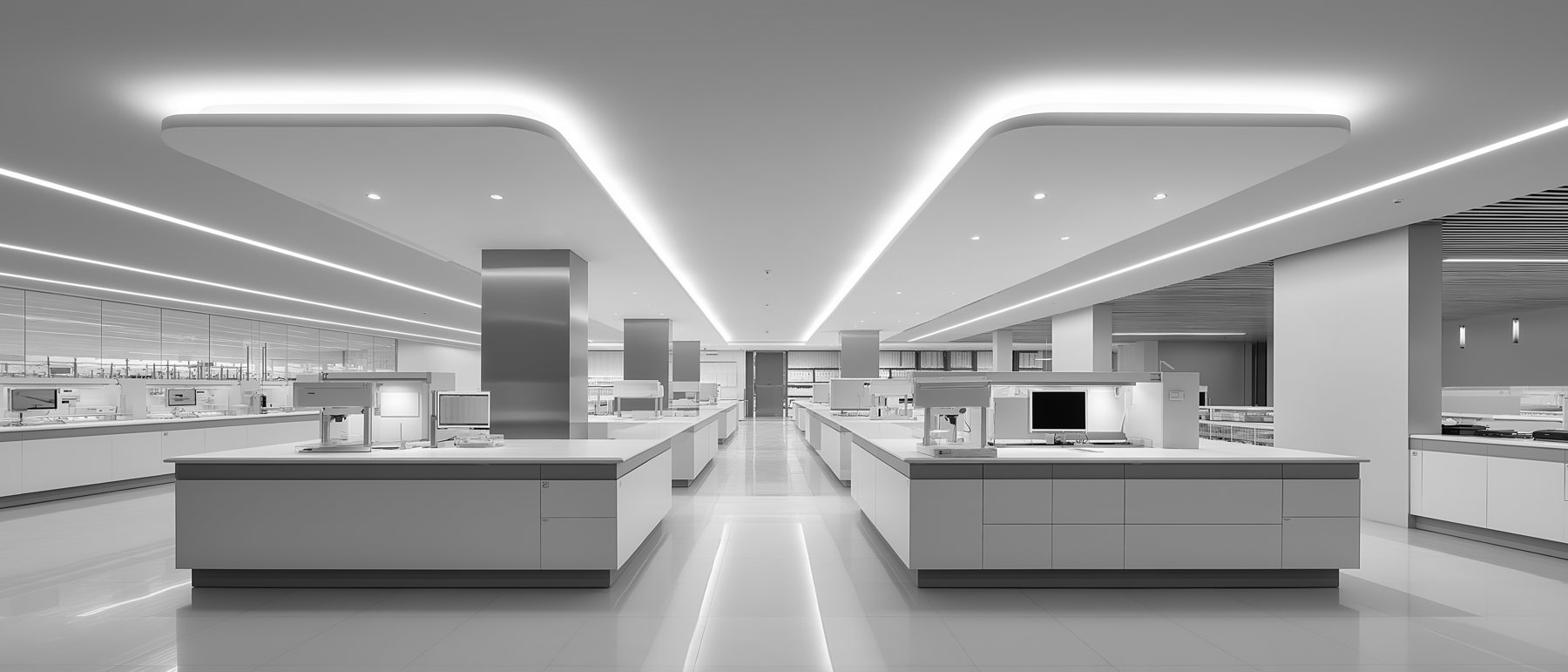
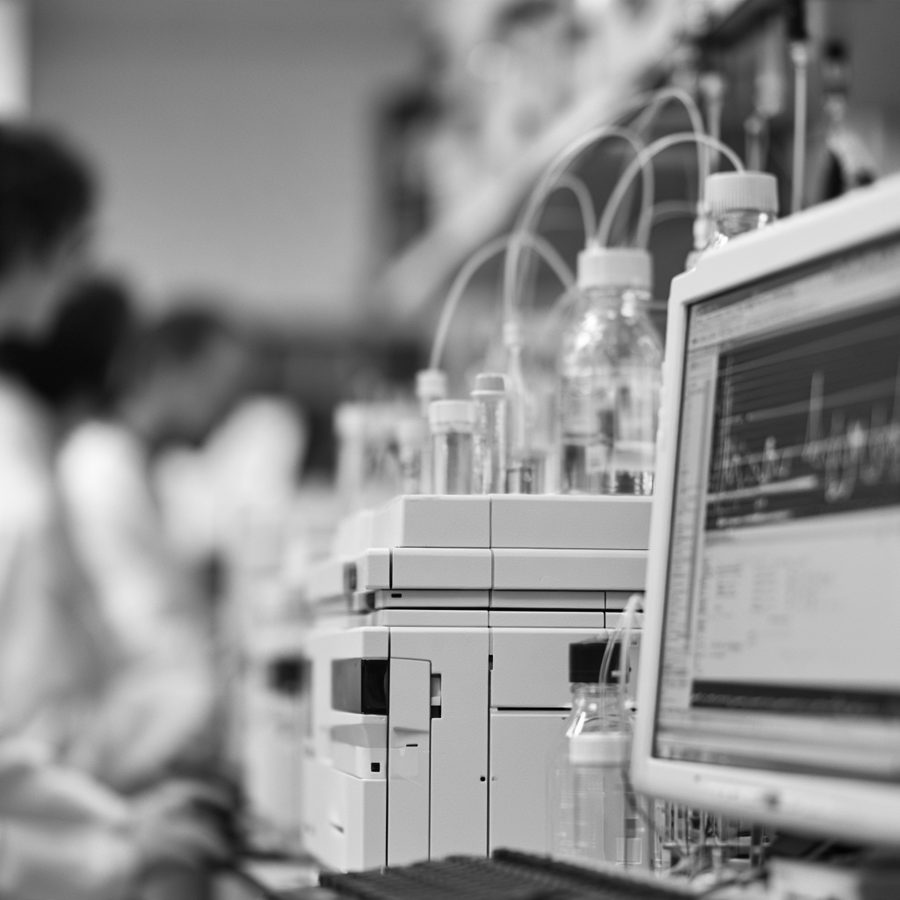
From the room, to the screen, to what the node sees, to the numbers the site acts on.
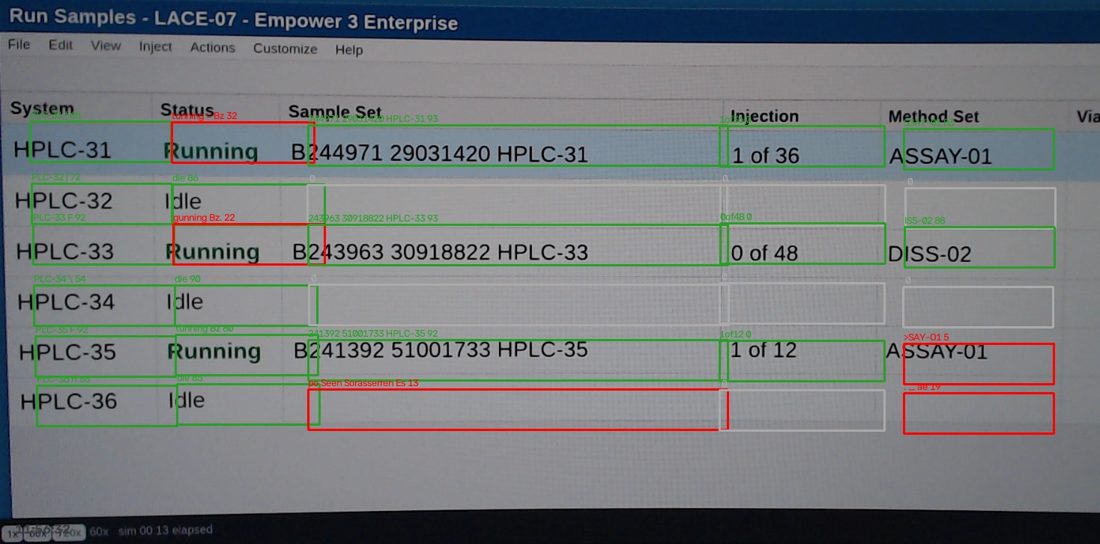
| HPLC-31 | Running | 1 of 36 · ASSAY-01 |
| HPLC-32 | Idle | nothing loaded |
| HPLC-33 | Running | 0 of 48 · DISS-02 |
| HPLC-34 | Idle | nothing loaded |
| HPLC-35 | Running | 1 of 12 · ASSAY-01 |
| HPLC-36 | Idle | nothing loaded |
Analyzer 4 finishes its run. The node beside it sees the state change and stamps the time.
Nobody has loaded the next run. The engine promotes "waiting, 2 h 22 m" and Reporter puts it on the board.
An agent asks the hub what is stopped or free. It gets the fact, its source, and its clock quality. It asks to page the shift lead. Waiting for approval.
Recorder drafts the shift handover: what ran, what waited, what stopped and why. A person reads it and signs it.
The first analyst loads Analyzer 4. The wait ends. Memory notes that on Tuesdays this lab loses two hours here.
Three things to buy, in the order a site is ready for them. Nobody starts at the end.
One node beside the thing that matters. By evening you know its state, how long it sat waiting, and why it stopped. Nothing installed on anything.
Every node on the site, one hub, one board. Your cloud, your agents, one contract for your BI team. Three agents come in the box.
Operator runs one validated task, one approval per step, limits in the driver. The site decides when, and which task first.
Start with one. Tell us the one thing.
Bark started in pharma, where the rules are hardest and the equipment is oldest, and it is running on the bench against a real instrument screen. Critical infrastructure is in conversation through a port operations partner. Manufacturing and logistics has a working dock demo. One customer conversation per industry until the first site is live.
QC labs, packaging lines, warehouses. Instrument state and utilization, waiting and changeover time, lot release lead time, and later one validated task at a time. Read state, never results; nothing touches a validated system.
Ports, utilities, water, grid, airports. Gates, yards, pumps, switchgear, meters: equipment that shows its state to nobody. Same Bark, same rule: video and raw data never leave the site.
Shop floors, docks, warehouses. Machine state and stoppage reasons from what the line already shows, pallets and labels at the dock, loading n of m, a mis-load stopped before the truck leaves.
Tomorrow Bark is how agents see and run a parking lot, a machine shop, a hospital wing. Anywhere the physical world is already showing what it is doing and no software is listening.
Built for sites where nothing can be installed, nothing can leave, and every number has to be explained.
Nodes talk to each other over their own radio. No port on your switch, no address on your LAN. Or they use the LAN you give them.
Nothing on your network unless you want it there, nothing installed on your systems, an inventory IT can sign in an afternoon. A site goes live in a day, not a quarter.
Runs without any cloud. When you want it connected, the Hub backhauls sealed facts to your own cloud, lake or historian. We never hold your data.
Models learn from your screens, your labels, your lines. Nothing pooled, nothing shared.
A model trained this morning is on every node by lunch: signed, pushed through the Hub or carried on a stick, rolled back with one command if it reads worse than the last one.
Every fact carries its source, its time and its clock quality. Any number traces back to the frame.
Disk encrypted at rest. Every fact signed by the node that made it. Exports sealed to the site's key; the node holds only the public half and cannot read back what it shipped.
Video and raw data never leave the site. Facts do, sealed, only when you say so.
Kept everywhere, because they are good rules.
We read a screen, a label or a read-only view. We never connect into the instrument, the MES, the LIMS or the ERP to get there.
Results stay on the LIMS path. We only know that a run is running, waiting, faulted or done.
The node holds only a public key. What it ships, it cannot read back.
No model sits in the result path. Limits are in code, not in a prompt.
One job per agent, one key per agent, only the facts that job needs. Encrypted and signed in both directions.
Start with one node and one thing that matters. Facts in a day, agents on it the week after. The rest of the site follows on the same platform.
hello@salicinlabs.com